


Why Is My Car Shaking? Common Causes & Repairs


The steering wheel starts to buzz somewhere around 60 mph on I-25, and by 70 it's a steady shimmy you can feel in your hands and seat. Slow down and it fades. Speed up and it's back. Car shaking is one of those problems that's easy to ignore until it isn't, and the cause can range from a simple tire balance to a brake or suspension issue that affects how safely your vehicle stops and steers.
The good news is that the shake itself tells a technician a lot, if you pay attention to when it happens.
When It Shakes Matters More Than How Much
Here's the most useful thing you can do before you bring your car in: notice the conditions. A vibration that appears only at highway speed points to a very different set of causes than one that happens when you brake or while the engine idles. Before your appointment, try to answer:
Does it happen at a certain speed, or all the time?
Does it get worse when you brake?
Do you feel it in the steering wheel, the seat, or the brake pedal?
Does it happen when the car is stopped with the engine running?
Did it start after hitting a pothole or curb?
Sharing these details helps narrow the diagnosis quickly, which often saves diagnostic time.
Car Shaking at Highway Speed? Start With the Wheels and Tires
If the vibration shows up around 50 to 70 mph and eases at lower speeds, the tires and wheels are the most likely source:
Unbalanced tires. Wheel weights can fall off, and tires wear unevenly over time. Rebalancing is a quick, inexpensive fix.
Uneven or damaged tires. Cupping, flat spots, or a bulge in the sidewall can all cause shaking. A bulge is a safety concern and needs attention right away.
Bent wheel. A hard hit can bend a rim just enough to create a vibration you feel at speed.
Alignment. Misalignment more often causes pulling and uneven tire wear than shaking, but it can contribute and speeds up the tire damage that does.
The Colorado Causes Most Drivers Don't Think Of
Two local factors cause more car shaking than most people realize.
First, freeze-thaw season is hard on roads. Potholes around Thornton, Northglenn, and Brighton multiply every late winter and spring, and one solid hit can knock a wheel out of balance, bend a rim, or damage a tie rod.
Second, and this one surprises a lot of drivers: in winter, snow and slush can pack into the inside of your wheels and freeze there. That uneven chunk of ice throws the wheel out of balance, creating a vibration that feels exactly like a tire problem. If the shaking started after a snowy drive and disappears once the car warms up in a garage, packed ice is a likely culprit. Rinsing out the wheels or letting the car thaw usually solves it, and it's worth ruling out before paying for repairs.
Shaking When You Brake
If the steering wheel shakes or the brake pedal pulses when you slow down, the brakes are the first place to look. Warped or unevenly worn rotors are the most common cause, and heavy braking on long downhill grades, like returning from the mountains on I-70, generates a lot of heat that accelerates rotor wear.
Don't put off brake-related vibration. It can increase stopping distances and usually gets worse over time. A technician can measure the rotors and determine whether they can be resurfaced or need replacement, along with the pads.
Shaking at Idle or When Accelerating
A vibration you feel when the car is stopped, or one that shows up as you accelerate, usually points to the engine or drivetrain rather than the wheels:
Misfires from worn spark plugs, ignition coils, or fuel delivery problems can make the engine run rough. A flashing check engine light with shaking is a sign to stop driving and get it checked.
Worn engine or transmission mounts let normal engine vibration transfer into the cabin.
Worn CV axles can cause vibration during acceleration, sometimes with a clicking noise when turning.
Suspension wear in ball joints, tie rods, or control arm bushings can create a looseness or shimmy that gets worse over bumps.
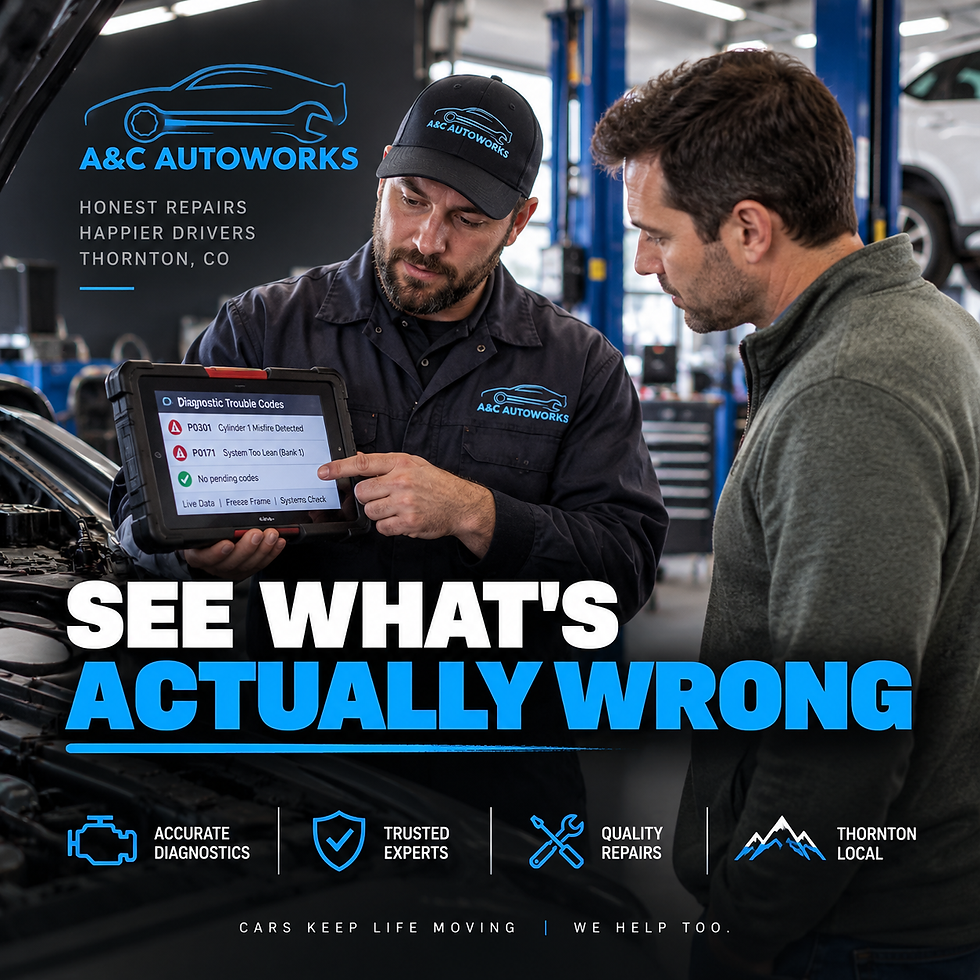
This is where proper engine diagnostics make a big difference. Reading trouble codes and testing components identifies the actual cause rather than guessing and replacing parts.
Is It Safe to Keep Driving?
A mild vibration from tire balance isn't an emergency, but it shouldn't be ignored either, since it accelerates wear on tires and suspension. Get your car inspected promptly if the shaking comes with:
Pulling, loose, or unresponsive steering
A pulsing brake pedal or grinding noises
A flashing check engine light
A visible tire bulge
Vibration that is getting noticeably worse
Waiting can also make the eventual repair more expensive. An unbalanced tire left alone wears unevenly, which can turn a simple balance into a tire replacement, and constant vibration adds stress to shocks, struts, and wheel bearings. Catching the cause early usually keeps one small repair from becoming several.
Getting It Fixed the Right Way
The key to fixing a shake is an accurate diagnosis. A shop that starts with a test drive and inspection, rather than replacing parts one at a time, will usually get you back on the road faster and for less. Our full list of auto repair services covers tire balancing, alignment, brakes, suspension, and engine diagnostics under one roof. Before you book, check our current coupons for savings on common repairs, and learn more about us and how we work with customers.
If your car shaking has you worried, drivers in Thornton, Northglenn, Brighton, and Erie can contact A&C Autoworks today to schedule a diagnostic appointment.


Comments