


Auto Shop Near Me: How to Tell a Trustworthy Repair Shop From One That Isn't
A dashboard warning light that's been on for three weeks isn't ignorance — it's usually distrust. Plenty of drivers know something needs attention and put off finding out what, specifically because the last "quick diagnostic" at some shop turned into a $1,200 estimate for four different things, only one of which actually mattered. That history is exactly why the search for an auto shop near me so often comes with more hesitation than urgency: people aren't just looking for a mechanic, they're looking for one they can trust not to pad the bill.
Why Trust Is the Real Search Term, Even When It's Not Typed
Nobody searches "auto shop near me that won't overcharge me," but that's functionally what's being asked. The auto repair industry has a long-standing reputation problem around unnecessary upsells and vague diagnostics, and that reputation is earned honestly in enough cases that skepticism is a reasonable default for most drivers walking into an unfamiliar shop. A shop that explains what's actually wrong, shows the worn part rather than just describing it, and separates "needs fixing now" from "worth monitoring" is doing the thing that actually builds the trust everyone's implicitly searching for.
Engine Diagnostics: Why the First Read Isn't Always the Full Picture
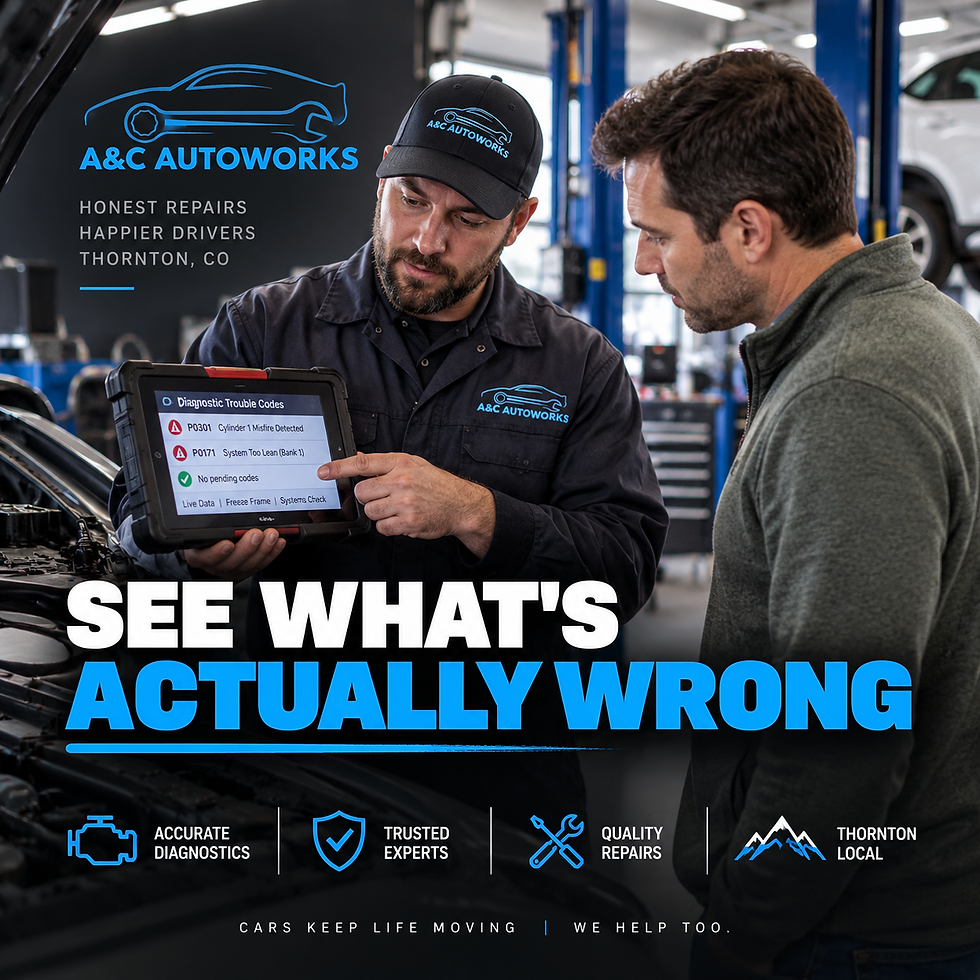
When a check engine light comes on, the temptation — for shops and drivers alike — is to treat the diagnostic code as the complete answer. In reality, engine diagnostics codes point to a system or component, not always a definitive root cause, and a code for something like a misfire can stem from several different underlying issues depending on mileage, maintenance history, and what else is going on with the vehicle. A shop that reads the code and quotes a repair on the spot, without further investigation, is sometimes right and sometimes guessing. A shop that reads the code, explains what it could indicate, and does the additional legwork to confirm before quoting a fix is doing the more thorough — and ultimately more honest — version of the same job.
The Hidden Bottleneck: Maintenance Records, Not Just Symptoms
Most drivers walk into an auto shop describing only the current symptom — a noise, a light, a vibration — without realizing that maintenance history often matters just as much to an accurate diagnosis. A brake issue on a car that's never had a brake repair and one that's on its third set of pads tell a mechanic very different things about what's likely going on and how urgent the fix is. Shops that ask about maintenance history before diagnosing, rather than treating every vehicle as a blank slate, tend to catch the actual cause faster and avoid recommending work that isn't relevant to this particular car's history.
Repair vs. Replace: A Decision That Deserves an Honest Answer
At a certain point with any aging vehicle, almost every repair decision becomes a repair-versus-replace question, whether it's about a specific component or the car as a whole. A worn suspension component on an otherwise well-maintained vehicle is usually worth repairing. The same component on a vehicle with multiple other deferred issues and a value that's approaching the cost of the repair itself is a genuinely different calculation. A trustworthy shop will walk through that math honestly — including telling a customer when a repair isn't worth it relative to the vehicle's value — rather than defaulting to "fix everything" regardless of whether it makes financial sense.
Alignment Issues: The Symptom That Gets Misdiagnosed Often
Alignment problems produce a specific set of symptoms — uneven tire wear, a car that pulls slightly to one side, a steering wheel that isn't centered when driving straight — that get misattributed to other systems more often than most drivers realize. A driver who notices their car pulling right might reasonably assume it's a tire issue or even a brake issue, when a proper alignment check would reveal the actual cause faster and cheaper than replacing components that were never the problem. This is a good example of why an accurate initial diagnosis matters more than jumping straight to the most commonly guessed fix.
Seasonal Vehicle Care Colorado Drivers Shouldn't Skip
Front Range winters put specific stress on vehicles that milder climates don't — battery performance drops sharply in cold temperatures, tire pressure needs adjustment as temperatures swing, and road salt and sand accelerate wear on brake components and undercarriage parts. Drivers in Thornton, Northglenn, and Westminster who get a seasonal check before winter and again before summer tend to catch developing issues — a marginal battery, worn brake pads — before they become a roadside emergency rather than a scheduled visit.
If you're looking for an honest auto shop near you in Thornton, Broomfield, or Erie, schedule a diagnostic visit with A&C Autoworks — we'll show you exactly what's going on before we recommend anything.


Comments